Ottawa Cracks Down on Temporary Foreign Worker Program: What Employers and Foreign Workers Need to Know in 2026

Ottawa Reports Increased Non-Compliance Amid TFWP Crackdown
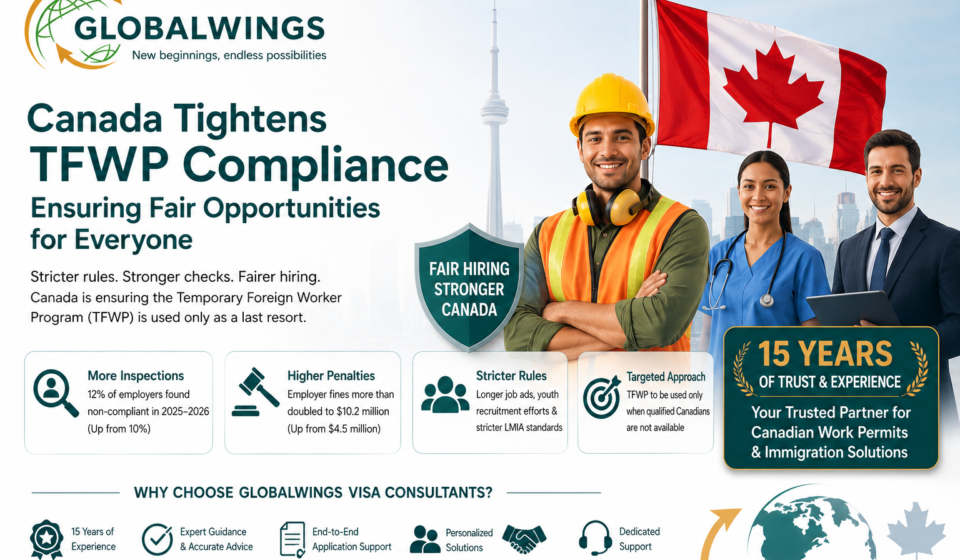
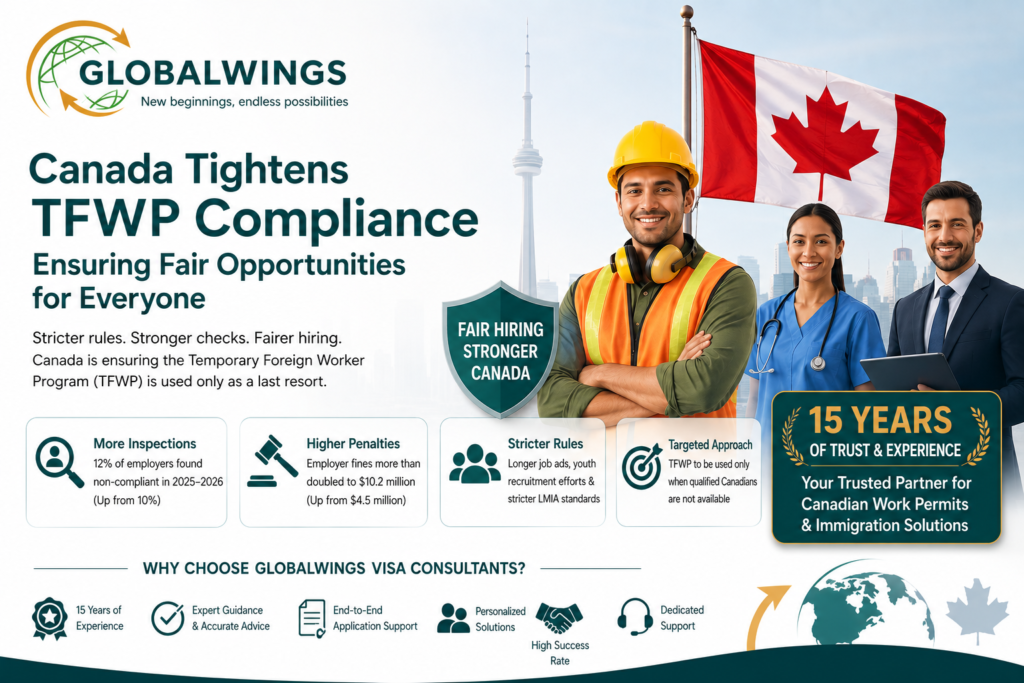
Canada has significantly tightened oversight of the Temporary Foreign Worker Program (TFWP) as part of its broader effort to protect the Canadian labour market and ensure employers follow immigration regulations. According to the latest update from Employment and Social Development Canada (ESDC), more employers were found violating TFWP rules during the 2025-2026 fiscal year, leading to record fines and stricter compliance measures.
These changes affect Canadian employers, foreign workers, and anyone planning to work in Canada through an LMIA-based work permit. Understanding the latest updates is essential before submitting a work permit or Labour Market Impact Assessment (LMIA) application.
In this article, we explain the latest TFWP compliance report, the government’s new measures, and what these changes mean for employers and foreign workers in 2026.
Canada Increases Compliance Inspections Under TFWP
The Canadian government has intensified its enforcement efforts to ensure employers comply with the rules of the Temporary Foreign Worker Program.
Between April 1, 2025, and March 31, 2026, ESDC completed 1,488 employer compliance inspections.
The results showed:
- 12% of employers were found non-compliant
- This is an increase from 10% during the previous fiscal year
- Employer penalties reached CAD $10.2 million
- In comparison, fines totalled only CAD $4.5 million during 2024-2025
The increase in inspections demonstrates Canada’s commitment to preventing misuse of the Temporary Foreign Worker Program.
Employers were fined for several violations, including:
- Failure to comply with workplace health and safety regulations
- Violations of employment standards legislation
- Providing inaccurate job offers
- Failure to meet LMIA conditions
- Non-compliance with worker wage and employment commitments
- Poor record keeping
- Failure to provide promised working conditions
Canadian authorities are making it clear that employers must strictly follow all obligations after hiring temporary foreign workers.
What Is the Temporary Foreign Worker Program (TFWP)?
The Temporary Foreign Worker Program allows Canadian employers to hire foreign workers when qualified Canadian citizens or permanent residents are unavailable.
Before hiring most foreign workers under this program, employers must receive a positive or neutral Labour Market Impact Assessment (LMIA) from Employment and Social Development Canada.
The LMIA confirms that hiring a foreign worker is not expected to negatively affect Canada’s labour market.
Only after obtaining a valid LMIA can most employers support a foreign worker’s work permit application.
Canada’s Goal: TFWP as a Last Resort
The Canadian government has repeatedly stated that the Temporary Foreign Worker Program should only be used when employers cannot find suitable Canadians or permanent residents.
The government wants employers to:
- Hire Canadians whenever possible
- Invest more in domestic recruitment
- Improve wages and working conditions
- Use foreign labour only when genuine shortages exist
This policy has become increasingly important as Canada experiences higher unemployment rates in several regions.
Major Changes Introduced Since 2024
The latest compliance report follows several important policy changes introduced over the last two years.
1. Annual Temporary Resident Targets
Canada introduced annual admission targets for temporary residents, including work permit holders.
The objective is to better manage temporary immigration while maintaining labour market stability.
2. Moratorium on Low-Wage LMIAs
The government placed restrictions on processing certain low-wage LMIA applications in regions experiencing higher unemployment.
This policy aims to encourage employers to hire local workers before relying on temporary foreign workers.
3. New Low-Wage Wage Threshold
A job is classified under the Low-Wage Stream if wages are below 120% of the regional median wage.
For example:
- Ontario: $36 per hour
- Alberta: $36 per hour
Employers offering wages below these thresholds fall under additional program restrictions.
4. Longer Recruitment Requirements
To prove that no Canadians are available for a position, employers must now advertise jobs for a longer period.
The minimum advertising period has increased from:
- 4 weeks
- to 8 weeks
This gives Canadian job seekers more opportunity to apply before employers recruit internationally.
5. Mandatory Youth Recruitment Efforts
Employers must now demonstrate that they actively attempted to recruit young Canadians before applying for an LMIA.
This additional requirement forms part of Canada’s strategy to improve youth employment.
6. Greater Scrutiny of High-Risk Sectors
LMIA officers are applying stricter assessment standards to industries considered at higher risk for non-compliance.
Applications from these sectors now undergo more detailed review before approval.
Rural Employers Receive More Flexibility
Although the government has tightened many TFWP rules, it has also introduced targeted flexibility for rural communities.
Participating rural employers can now hire temporary foreign workers for up to:
- 15% of their workforce
Previously, the limit was:
- 10%
This change helps rural employers address labour shortages where local workers remain difficult to find.
TFWP Admissions Continue to Decline
Government statistics show a significant decrease in TFWP admissions.
Between January and April:
2024
- 31,565 admissions
2026
- 14,655 admissions
This represents a decline of more than 50%.
The federal government’s 2026 target allows:
- 60,000 TFWP admissions
These admissions represent roughly one-quarter of Canada’s overall work permit target for the year.
Canada also operates the International Mobility Program (IMP).
Unlike the TFWP, most IMP work permits do not require an LMIA.
The program supports:
- International agreements
- Cultural exchange
- Reciprocal employment
- Significant benefit to Canada
However, IMP admissions have also fallen sharply.
Admissions declined from:
- 142,805
- to 43,705
This represents approximately a 69% decrease compared to 2024.
What These Changes Mean for Foreign Workers
If you plan to work in Canada through an employer-sponsored work permit, these changes make proper documentation more important than ever.
Applicants should expect:
- More detailed employer verification
- Longer LMIA processing due to stricter assessments
- Increased scrutiny of job offers
- Greater importance of genuine employment opportunities
- Stronger employer compliance checks
Working with experienced immigration professionals can help reduce errors and improve application quality.
Tips for Canadian Employers
Employers planning to hire foreign workers should:
- Ensure recruitment efforts meet updated advertising requirements.
- Keep detailed employment records.
- Pay wages exactly as promised.
- Follow provincial labour laws.
- Maintain workplace safety standards.
- Meet all LMIA conditions.
- Prepare for possible compliance inspections.
Failure to comply can result in substantial financial penalties and restrictions on future participation in the Temporary Foreign Worker Program.
Why Choose GlobalWings Visa Consultants?
Choosing the right immigration consultant can make a significant difference in your Canadian immigration journey.
At GlobalWings Visa Consultants, we have 15 years of experience helping individuals and employers successfully navigate Canada’s immigration system.
Our Services Include:
- Canada Work Permit Assistance
- LMIA Guidance
- Employer Support Services
- Temporary Foreign Worker Program Applications
- Express Entry Consultation
- Provincial Nominee Program (PNP) Guidance
- Documentation Review
- Visa Filing Support
- Interview Preparation
- Post-Approval Assistance
Why Thousands Trust GlobalWings Visa Consultants
- 15 Years of Immigration Experience
- Expert knowledge of Canadian immigration policies
- Transparent and ethical consultation
- Personalized immigration strategies
- End-to-end application assistance
- Up-to-date guidance on changing immigration rules
- Dedicated customer support
- High standards of professionalism and accuracy
Whether you are an employer seeking qualified foreign workers or an individual looking for work opportunities in Canada, our experienced team is committed to helping you understand the latest immigration policies and prepare a strong application.
Canada’s latest Temporary Foreign Worker Program compliance report signals a clear shift toward stricter enforcement and greater accountability for employers. With higher inspection rates, increased penalties, longer recruitment requirements, and tighter LMIA assessments, both employers and foreign workers must ensure every application complies with current regulations.
Although the program remains an important pathway for addressing labour shortages, the Canadian government continues to emphasize that it should only be used when qualified Canadian citizens and permanent residents are unavailable.
Staying informed and preparing applications carefully is more important than ever in today’s evolving immigration landscape.
Frequently Asked Questions (FAQs)
1. What is Canada’s Temporary Foreign Worker Program (TFWP)?
The Temporary Foreign Worker Program allows Canadian employers to hire foreign nationals when qualified Canadians or permanent residents are unavailable for specific jobs.
2. Why has Canada increased employer inspections?
The government aims to prevent misuse of the program, protect foreign workers, and ensure employers comply with labour laws and LMIA conditions.
3. What happens if an employer violates TFWP rules?
Employers may receive financial penalties, face bans from hiring foreign workers, or be subject to additional compliance monitoring depending on the severity of the violation.
4. What is an LMIA?
A Labour Market Impact Assessment (LMIA) is a document issued by Employment and Social Development Canada confirming that hiring a foreign worker will not negatively affect Canada’s labour market.
5. Has Canada reduced TFWP admissions?
Yes. TFWP admissions during the first four months of 2026 dropped by more than 50% compared to the same period in 2024.
6. What is the new job advertising requirement for employers?
Employers must now advertise eligible positions for at least 8 weeks, instead of the previous 4 weeks, before applying for an LMIA.
7. Can rural employers hire more temporary foreign workers?
Yes. Eligible rural employers participating in the program may hire foreign workers for up to 15% of their workforce, an increase from the previous 10% cap.
8. How can GlobalWings Visa Consultants help?
With 15 years of experience, GlobalWings Visa Consultants assists clients with Canada work permits, LMIA guidance, employer documentation, immigration planning, and complete application support to help applicants navigate Canada’s evolving immigration system.